


What Are Zero Click Searches?
A Zero-Click Search (also called a no-click search) happens when someone types a query into Google or Bing, and the answer appears directly on the search results page. This means the user doesn’t need to click on any website link to find what they’re looking for.
As these searches become more common, businesses need to adapt their strategy. Using a professional SEO service can help your website stay visible in this competitive space—by optimizing content for featured snippets, local packs, knowledge panels, and other zero-click opportunities.
Key Takeaways
-
Zero Click SEO is about optimizing for visibility, not just clicks.
-
Zero click searches are rising due to mobile use, voice search, Google’s UX focus, and ad-driven models.
-
They reduce organic traffic but increase the value of brand visibility on SERPs.
-
Major zero click features include featured snippets, knowledge panels, People Also Ask, local packs, direct answers, and carousels.
-
Winning in this space requires structured content, schema markup, concise answers, and multi-format content.
-
Measuring success means tracking impressions, SERP visibility, and branded searches, not just traffic.
-
The future of SEO will emphasize AI-driven search, voice-first interactions, multimedia, and stronger E-E-A-T signals.
Why Are Zero Click Searches Increasing?
Zero click searches are growing because search engines are designed to keep users on their platforms longer while delivering the fastest possible answers. Instead of forcing users to click multiple links, they provide structured results that answer questions directly.
mobile search: The rise of mobile search plays a huge role. On smaller screens, users want instant, concise information without the friction of opening new tabs. When you quickly check a recipe, the score of a football match, or today’s stock price, you don’t want to dig through multiple pages. Google’s mobile-first indexing and SERP design cater to this preference.
voice search: Voice search through assistants like Siri, Alexa, and Google Assistant fuels zero click behavior. When you ask a voice assistant for the capital of a country or today’s weather, you receive an answer immediately, not a list of ten blue links.
user experience: Google’s focus on user experience pushes them to expand SERP features like featured snippets, knowledge graphs, and People Also Ask boxes. The goal is to minimize search time while maximizing satisfaction, even if that reduces traffic to individual websites.
advertising models: By keeping users on their own platform, Google can show more ads and promote more of its own services, from flights to maps, while still appearing user-centric.
In short, zero click searches are not an accident; they are the product of deliberate design and evolving user behavior.
The Impact of Zero Click Searches on SEO
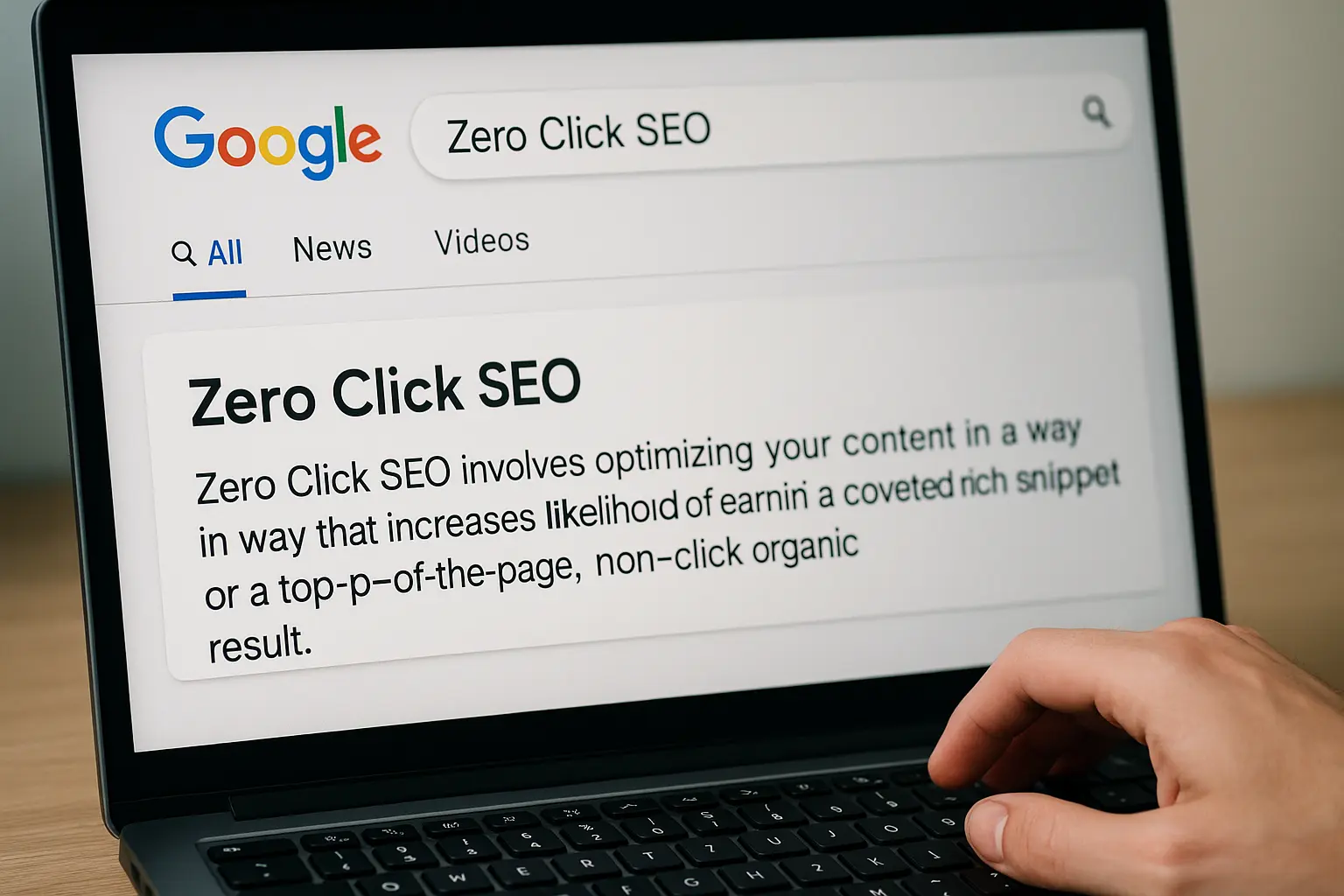
The rise of zero click searches is reshaping how businesses approach search engine optimization. Traditional SEO was all about driving organic traffic to websites by ranking high for specific keywords. But when users no longer need to click, the definition of “success” in SEO changes.
reduced organic traffic: One of the biggest impacts is the decline in website visits, even when a page ranks at the top. A featured snippet or knowledge panel may give away the answer immediately, leaving fewer reasons for users to explore the original site.
brand visibility vs. clicks: Even though traffic may drop, zero click searches increase the importance of being visible on the results page. Having your content featured in snippets or answer boxes means your brand name is associated with authority, even if users don’t click through.
higher competition for SERP features: As marketers understand the value of zero click visibility, competition to win snippets, People Also Ask results, and local packs has intensified. Businesses are now optimizing not just for rankings but also for these special SERP placements.
shift in content strategy: Instead of focusing only on long articles, SEO strategies now require concise, structured, and answer-focused content. Clear definitions, step-by-step explanations, and schema markup help search engines surface your content directly in SERPs.
measuring success differently: Traffic alone is no longer the only KPI. Marketers must track impressions, visibility share, and brand recall, since many interactions happen without a single click.
In essence, zero click SEO forces marketers to balance between visibility and traffic. While the volume of visits may shrink, the potential to build trust and authority directly in the search results is greater than ever.
Types of Zero Click SERP Features
Zero click searches are powered by specific SERP (Search Engine Results Page) features that deliver direct answers. Understanding these features is essential because each one influences how users interact with search results and how brands can adapt their strategies.
- featured snippets: These are highlighted boxes at the top of search results that provide a direct answer to a query. They often include definitions, lists, or step-by-step explanations extracted from a webpage. Featured snippets are prime real estate, since they appear above organic listings and often satisfy user intent immediately.
- knowledge panels: Displayed on the right-hand side (desktop) or at the top (mobile), knowledge panels pull information from trusted sources like Wikipedia, Google’s Knowledge Graph, or official brand websites. They showcase quick facts, company details, or biographical information without requiring a click.
- people also ask (PAA) boxes: These expandable question-and-answer boxes appear within search results. Each time a user clicks on one question, more related questions appear, providing a chain of answers directly in the SERP.
- local packs: For location-based queries, Google shows a map with three highlighted businesses, along with ratings, addresses, and contact details. This format reduces the need to click through to websites when users can simply call or navigate directly from the SERP.
- direct answer boxes: These are exact answers to factual queries, such as “2+2,” “time in Tokyo,” or “currency conversion.” They appear instantly, bypassing the need for users to click any link at all.
- image and video carousels: Visual content is also a zero click feature. Carousels display multiple images or videos that users can swipe through directly on the search page, drawing attention without a website visit.
Each of these features contributes to the growing ecosystem of zero click searches. For marketers, the key is to understand where their audience’s queries are most likely to surface and how to optimize for those specific features.
Types of Zero Click SERP Features
|
SERP Feature |
Description |
Example Query |
|
Featured Snippets |
Highlighted box with direct answers, often definitions or step-by-step info |
“What is blockchain?” |
|
Knowledge Panels |
Fact boxes from Google’s Knowledge Graph or trusted sources |
“Elon Musk” |
|
People Also Ask |
Expandable Q&A boxes that reveal related questions and answers |
“Best SEO tools” |
|
Local Packs |
Map + business listings with ratings and contact info |
“Coffee shop near me” |
|
Direct Answer Boxes |
Instant factual answers to simple queries |
“Time in Tokyo” |
|
Image/Video Carousels |
Swipeable visual results directly in SERPs |
“iPhone 15 review” |
Adapting Your SEO Strategy for Zero Click Searches
Zero click SEO doesn’t mean the end of search optimization; it means changing the way success is measured and how content is delivered. Instead of only chasing clicks, businesses must focus on visibility, authority, and engagement directly within the SERPs.
- optimize for featured snippets: Craft content that directly answers common questions in a concise way. Use clear headings, definitions, and step-by-step explanations so search engines can easily extract your information. Structured, well-formatted answers are more likely to appear in snippets.
- implement schema markup: Schema (structured data) helps search engines understand your content. By adding FAQ schema, product schema, or how-to schema, you increase your chances of appearing in SERP features such as rich results and People Also Ask boxes.
- leverage local SEO: For businesses with a physical presence, optimizing for Google Business Profile is critical. Ensure your NAP (name, address, phone) data is consistent, encourage reviews, and add relevant categories. This boosts your chances of showing in local packs.
- focus on brand authority: Even if users don’t click, appearing repeatedly in zero click features strengthens brand recognition. Over time, this authority can influence future clicks, conversions, and trust.
- create multi-format content: Diversify content to include short answers, visuals, and videos. Video snippets and image carousels are becoming more common in zero click results, so repurposing content into different formats increases reach.
- measure impressions and visibility: Success isn’t just about traffic anymore. Tools like Google Search Console help track impressions and SERP presence. By monitoring how often your brand appears, you can gauge the effectiveness of zero click SEO efforts.
Adapting your SEO strategy means embracing a hybrid mindset: driving traffic where possible but also maximizing SERP visibility and brand impact without the click.
Track and Measure Your Visibility
In a zero-click world, measuring SEO success requires more than counting website visits. Since users often find answers directly on the SERPs, visibility and presence become just as important as clicks. Businesses must focus on how often their brand appears in search features and how effectively that presence builds authority.
- search impressions: Tools like Google Search Console provide impression data, which shows how often your content is displayed on search results, even if users don’t click. This helps track visibility beyond traffic.
- SERP feature tracking: SEO platforms such as SEMrush, Ahrefs, and Moz allow you to monitor whether your site ranks in featured snippets, People Also Ask boxes, or knowledge panels. Tracking these placements gives insights into your brand’s reach within zero click searches.
- click-through rate (CTR) analysis: Even in a zero-click environment, CTR still matters. A strong title and meta description can encourage clicks when users want more detail than the snippet provides. Monitoring CTR helps refine your content presentation.
- branded search growth: An indirect way to measure success is monitoring branded queries (when users specifically search for your brand name). More visibility in zero click features can increase trust and recognition, leading to higher branded search volume over time.
- engagement metrics post-click: For the users who do click, analyze dwell time, bounce rate, and conversions. These metrics confirm whether your authority built on the SERP translates into deeper engagement on your site.
Tracking visibility means shifting perspective: instead of focusing solely on “how many people visited,” ask “how many people saw my brand, associated it with authority, and may return later?”
The Future of SEO in a Zero-Click World
The future of SEO will not be defined only by rankings and clicks but by visibility, authority, and adaptability within evolving search landscapes. As search engines become smarter, the trend toward zero click searches will only accelerate, reshaping how marketers approach optimization.
- AI-driven search experiences:
AI-driven search experiences: With the rise of generative AI and conversational search assistants, answers are increasingly being delivered in natural language directly on SERPs. Instead of just displaying a list of links, search engines will act more like chatbots, offering context-rich, synthesized responses. For businesses, this means optimizing content not just for keywords but also for location-based intent. Leveraging GEO targeting ensures that when users search, AI-driven responses highlight results that are most relevant to their specific region—helping brands stay visible in localized zero-click and AI-powered search experiences.
- voice-first search growth: As smart speakers and mobile assistants continue to spread, more users will rely on voice queries. This format favors concise, authoritative answers that can be spoken back instantly, further increasing the importance of zero click SEO.
- integration of multimedia: Search engines are blending text, video, and interactive features into SERPs. Future zero click experiences will likely include short video answers, interactive tools, and augmented reality results — all without requiring a click.
- greater emphasis on E-E-A-T: Expertise, Experience, Authoritativeness, and Trustworthiness will play a central role. As users depend on zero click results, Google must ensure only credible sources are highlighted. Businesses will need to invest in building real authority and trust signals.
shift from traffic to brand presence: The long-term impact is a redefinition of SEO success. Instead of purely chasing traffic, businesses will focus on how consistently their brand appears in search features, how much trust they earn, and how effectively they convert recognition into leads or sales later.
In short, the future of SEO in a zero-click world demands agility. Businesses that embrace change, diversify content formats, and build strong brand authority will not just survive — they will thrive.
conclution:
Zero Click SEO is no longer a future challenge — it’s the reality of today’s search landscape. If you want your brand to stay visible, trusted, and competitive, you need to optimize not only for clicks but also for visibility in SERP features.
Start by reviewing your current content strategy: Are you answering user questions directly? Are you using schema markup to help Google understand your pages? Are you positioning your brand as a trustworthy authority in your niche?
Now is the time to adapt. At quanta.agency, we specialize in SEO strategies designed for the zero-click era. From optimizing for featured snippets to building local SEO visibility and creating concise, answer-driven content, our team helps your brand secure long-term authority in search.